Almost every organisation I work with is asking the same question: how do we get a grip on AI? People use ChatGPT, Claude or DeepSeek alongside Copilot, makers build agents in Copilot Studio, and nobody knows exactly what is running, who owns it, what it can reach or what it costs. The AvePoint Trust Platform is the first single answer to that question I have seen, and I am genuinely excited about it.
AvePoint announced the platform on 27 October 2026. It promises to discover, protect, govern and optimise agents, models, applications and AI vendors, whether your AI comes from Microsoft, Google, Salesforce or Anthropic. In this post I walk through what the platform does, why I think it fills exactly the gap organisations are running into right now, and how you can get into the private preview yourself.
Why this is needed now
AI adoption is growing faster than the governance around it. According to AvePoint’s State of AI Report 2026, 88.4% of organisations had at least one security incident involving an AI agent in the past year, and Gartner expects AI spending to grow by almost half in 2026. In practice I keep seeing the same three problems:
- Shadow AI. People use AI services outside approved channels, often with company data. Nobody knows which services, or how many.
- Agents without an owner. An agent an enthusiastic colleague built last year is still running, still has access to sensitive data, and its maker changed jobs long ago.
- Costs without oversight. Licences and token budgets are requested by e-mail and tracked in spreadsheets, and nobody knows whether they deliver anything.
Until now you had to answer those questions with separate tools, each covering one vendor. The Trust Platform tackles them in one place, along four disciplines: Observe, Protect, Govern and Optimise.
Observe: see what AI is running
It all starts with visibility. The platform gives you one view of AI activity, adoption, vendors and assets across the organisation. This is where you first see how big your AI estate really is.
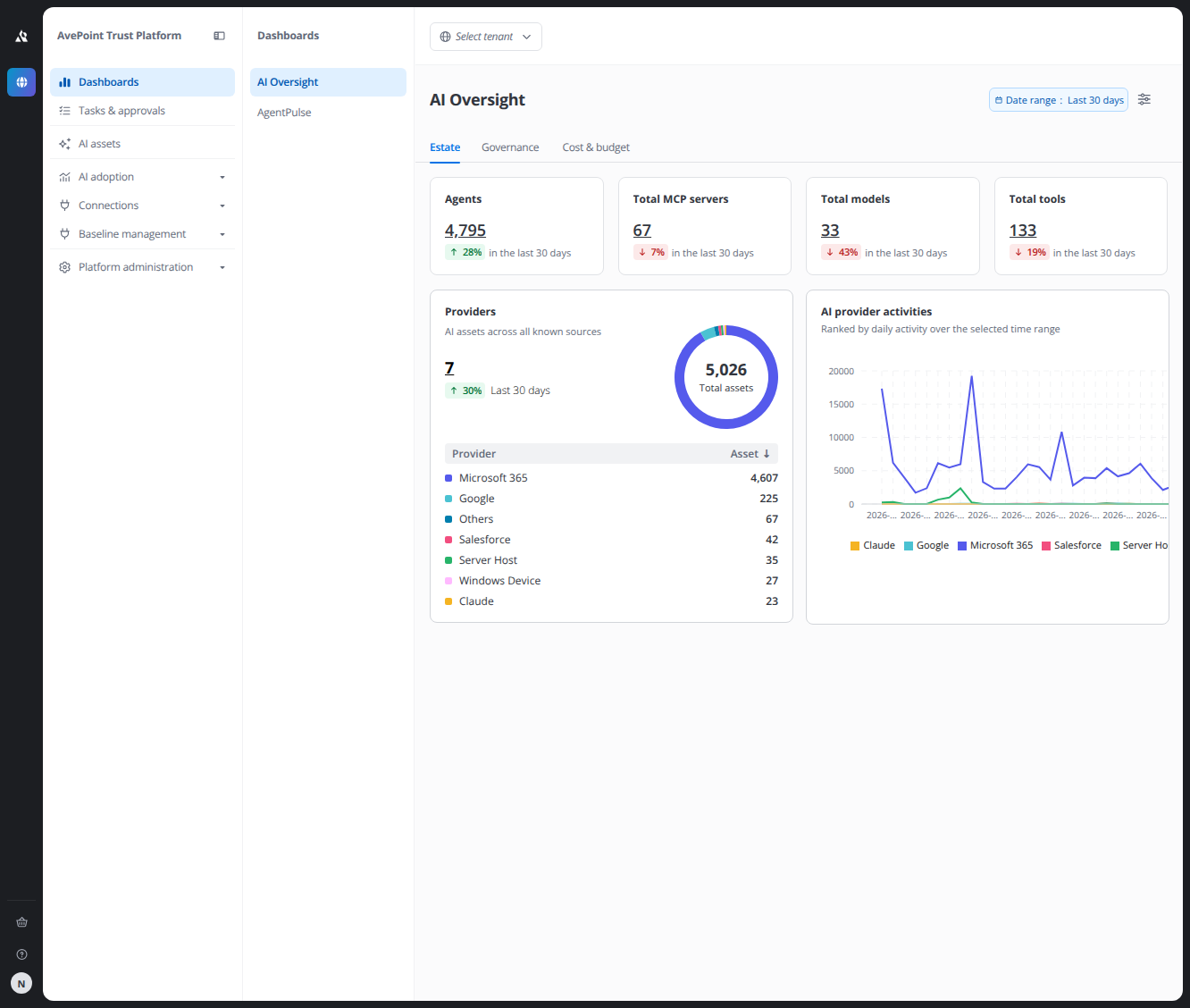
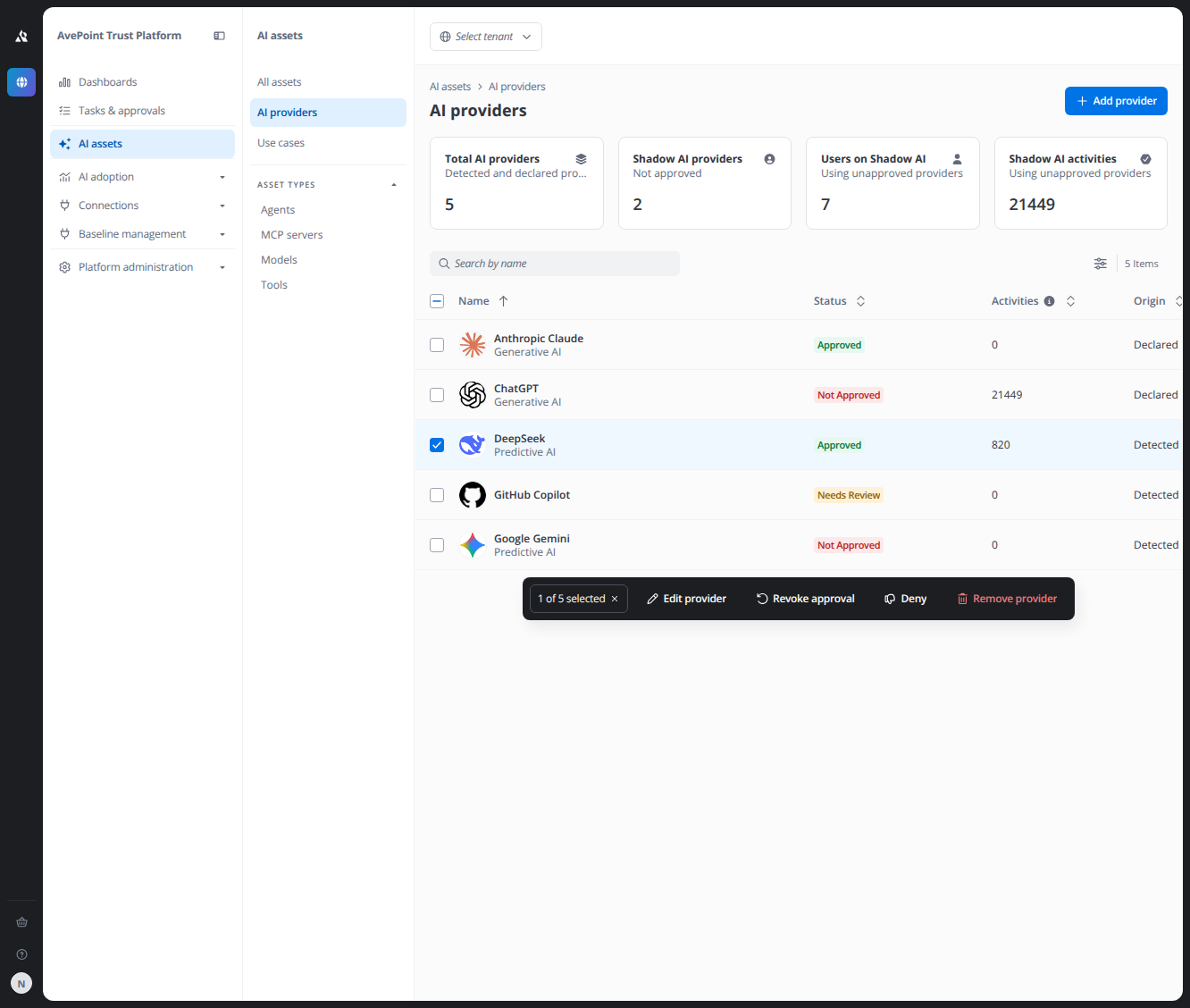
The part I am most pleased about: Shadow AI Detection. The platform shows which AI vendors are in use, including those used outside approved channels, with each vendor’s status (approved or not), number of users and activity. From that list you can block a service or approve it. It is the conversation I am having with nearly every client right now, and one we did not have a good answer to until now.
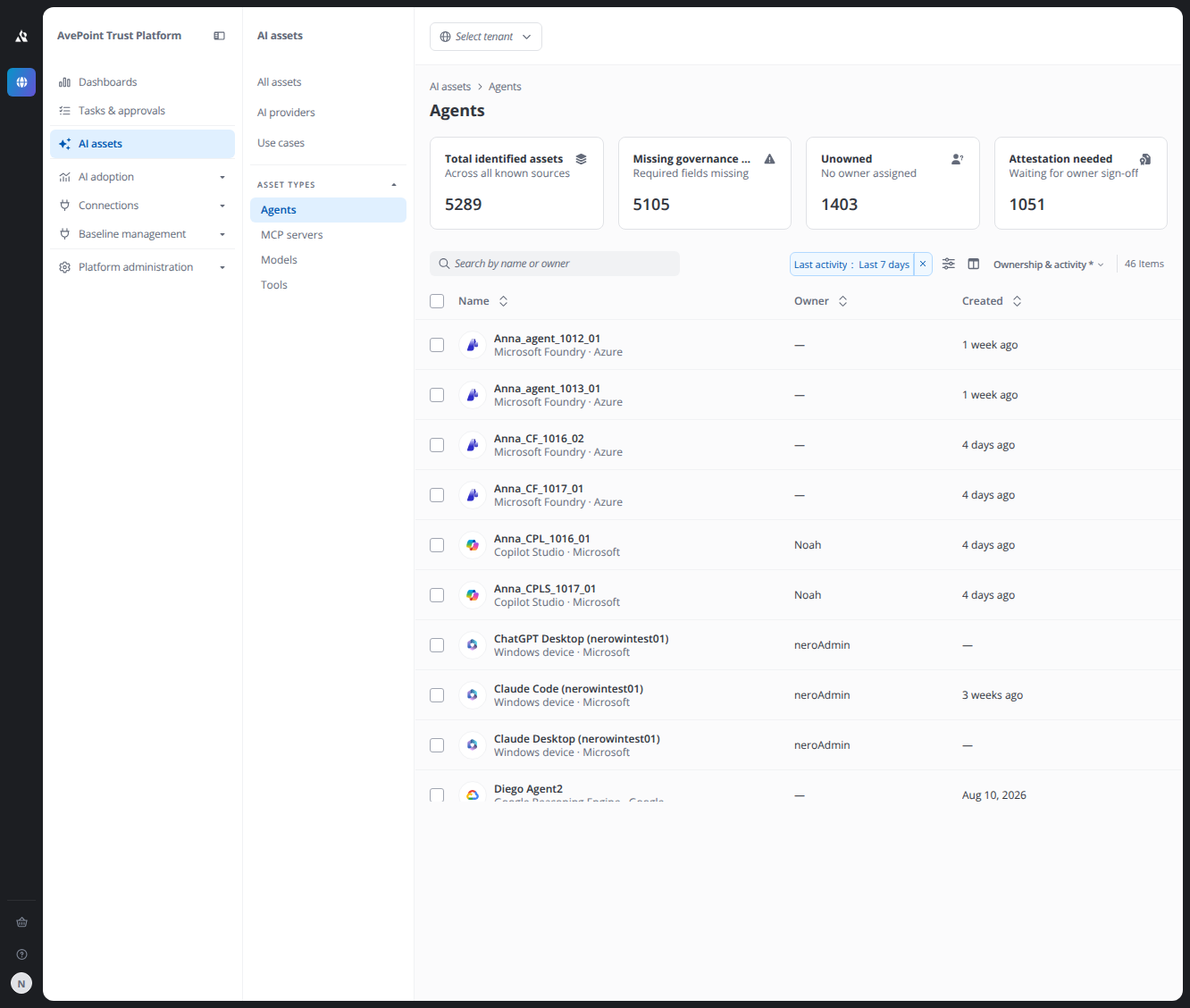
The platform also builds an AI inventory: agents, models, tools, MCP servers and the other components of your AI workflows. Sanctioned or not, built by IT or by a citizen developer. Supported platforms include Microsoft Copilot Studio and Foundry, Google Vertex AI and Salesforce Agentforce, with Anthropic Claude and MCP servers newly added. Agents on Windows and servers are covered too.
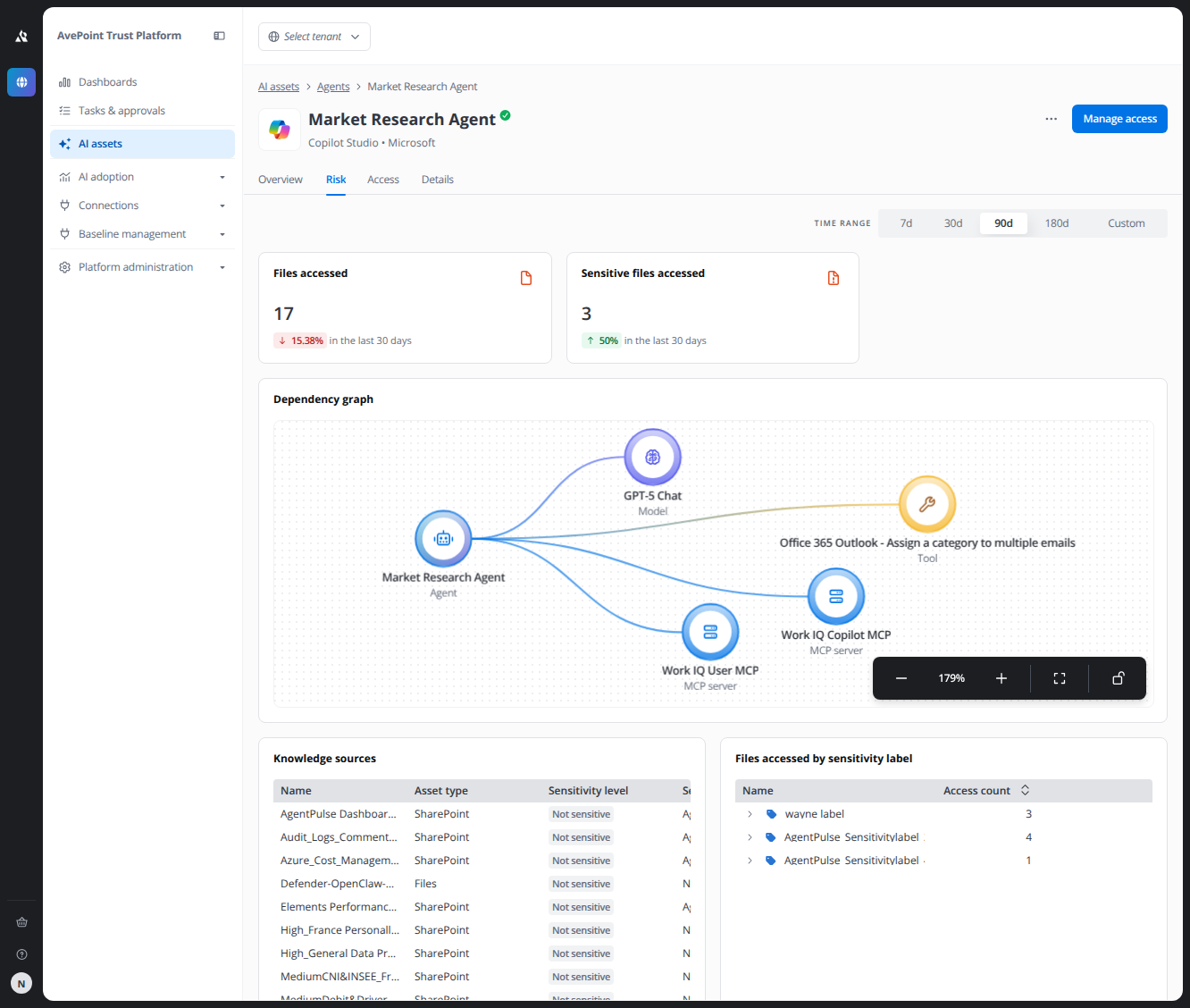
The AI Dependency Graph shows what each agent is connected to: which data, knowledge sources, models, tools and services. That answers the question that really matters with an agent: what can this thing actually reach?
Protect: from risk signal to action
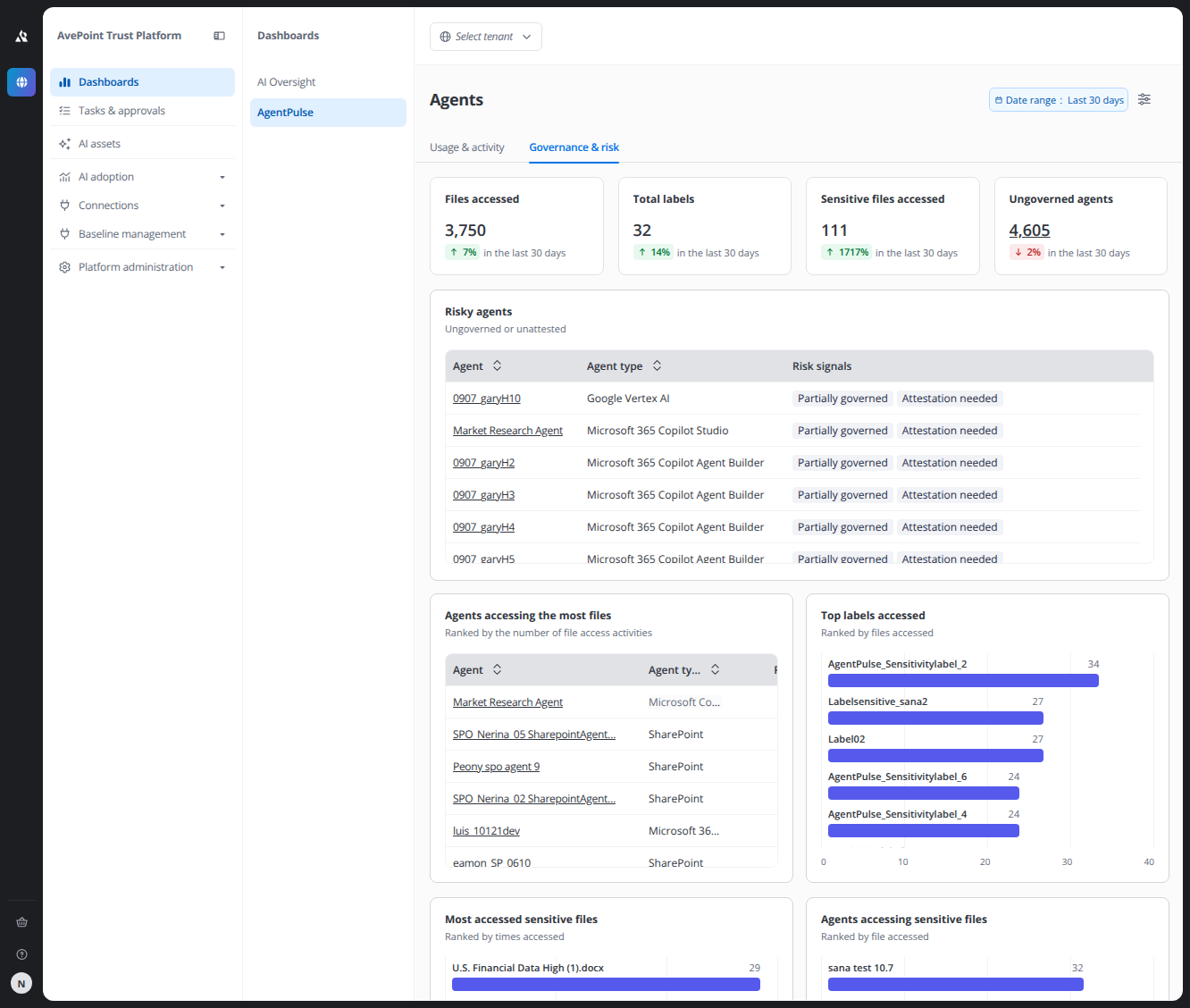
Visibility is great, but you want to know where to start. The platform combines activity, governance, ownership, access and data sensitivity into a risk picture per agent, and shows which requirements in the frameworks you have to meet are affected. You investigate an agent first (activity, access, dependencies) before choosing a response. Agents without an owner stand out straight away.
Protect is also about recovery, and that is where AvePoint’s 25 years in backup show. The platform takes immutable backups with point-in-time restore of Microsoft 365, Power Platform, SaaS apps such as ServiceNow, and cloud infrastructure in Azure, AWS and Google Cloud. New is that the agents themselves can be restored too, for example a Copilot Studio agent including its configuration, logic, prompts and flows. If an agent goes wrong, you roll it back to an earlier, known-good version.
Govern: every agent an owner, a purpose and an end date
If you know AvePoint Cloud Governance, you will recognise the principle immediately: what you do for Teams and sites with ownership, recertification and lifecycle, the Trust Platform now does for agents. Every agent gets an owner, policies and context on how sensitive the data it works with is. Owners confirm and recertify via Teams, Slack or e-mail, from discovery to retirement.
The central object is the AI use case: a description of how and why AI is used, with the related assets attached. A use case owner completes an intake covering purpose, intended use and evidence, and the compliance team decides whether the risk is acceptable. Every step ends up in an audit log.
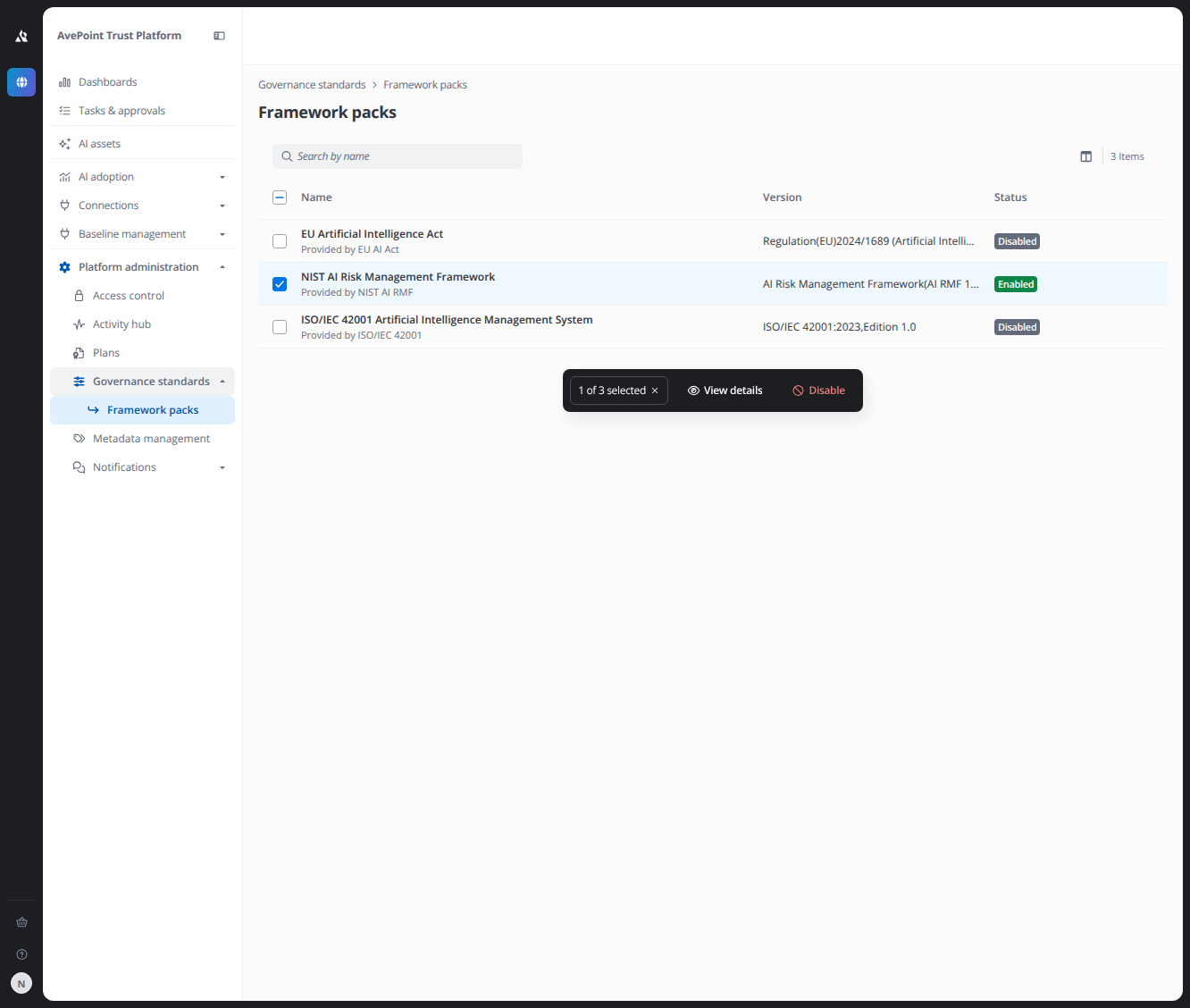
For me the strongest part: you choose the frameworks you have to comply with and the platform calculates and monitors the risks, obligations and controls for each use case. Under the bonnet sits the Governance Graph, which maps regulation such as the EU AI Act, ISO 42001 and the NIST AI RMF to your own organisation’s context. For organisations dealing with NIS2 as well as the AI Act, that is exactly the accountability regulators will want to see.
Optimise: control AI costs
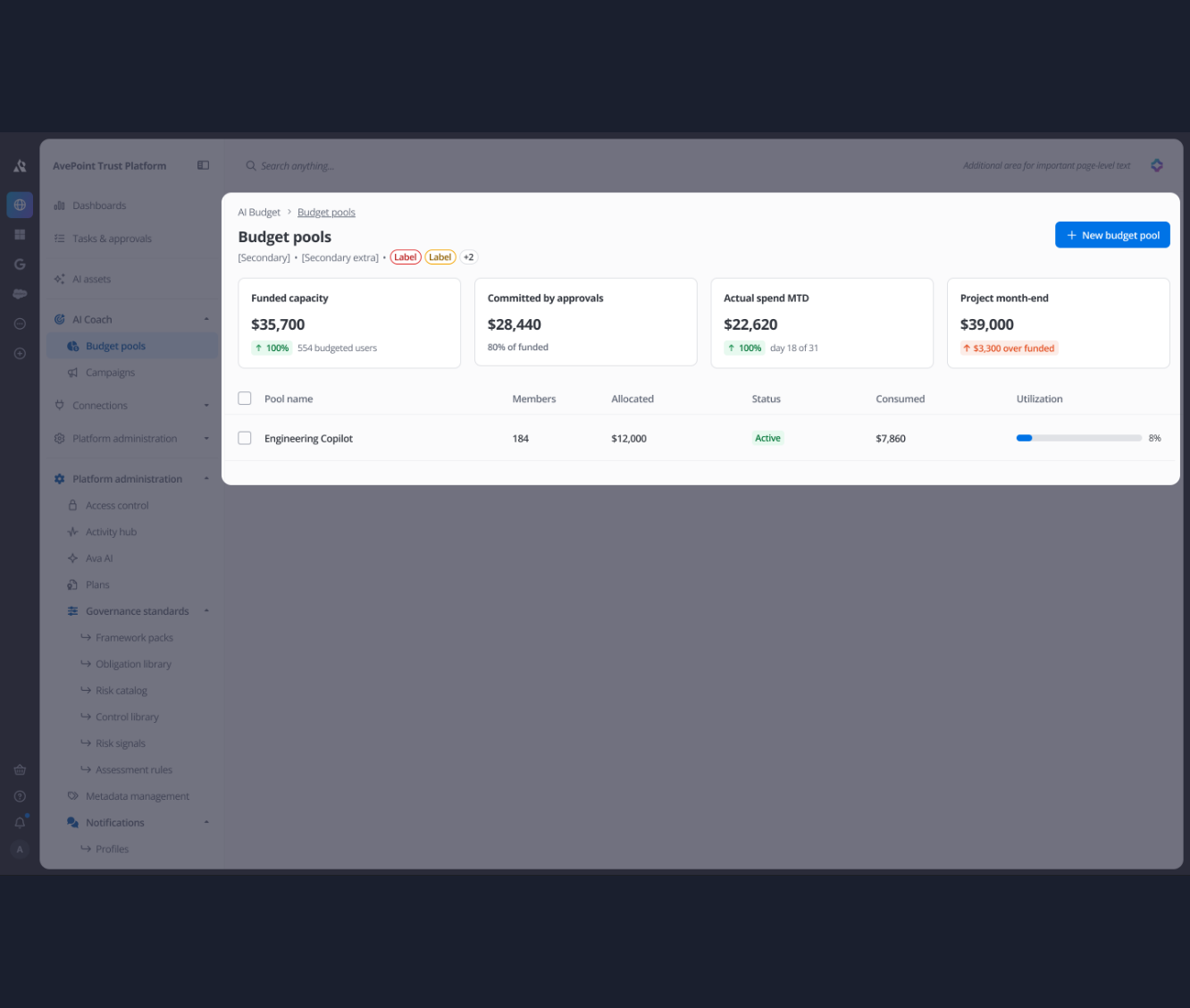
This is the part I expect managers and CFOs to recognise most. Instead of handling AI budgets through e-mail and spreadsheets, central admins create budget pools based on existing Entra users and groups. Each pool has an owner, approvers, a funded AI tool and set request amounts. The budget sits with the leaders closest to the work, and the spend stays visible.
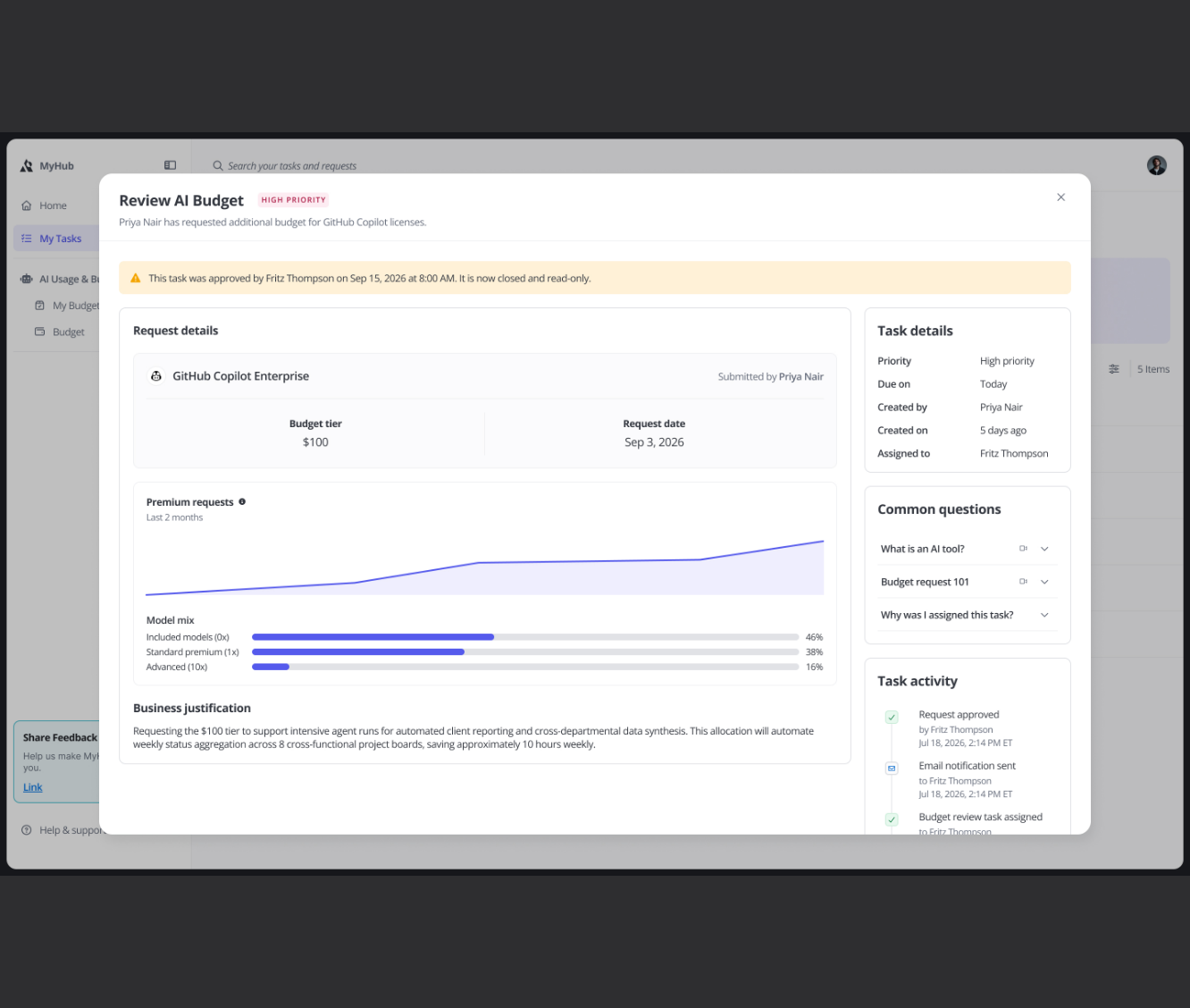
When someone needs more, they request extra capacity with a platform, an amount and a business justification. The approver sees current usage, remaining budget and the justification, and decides on facts rather than gut feeling.
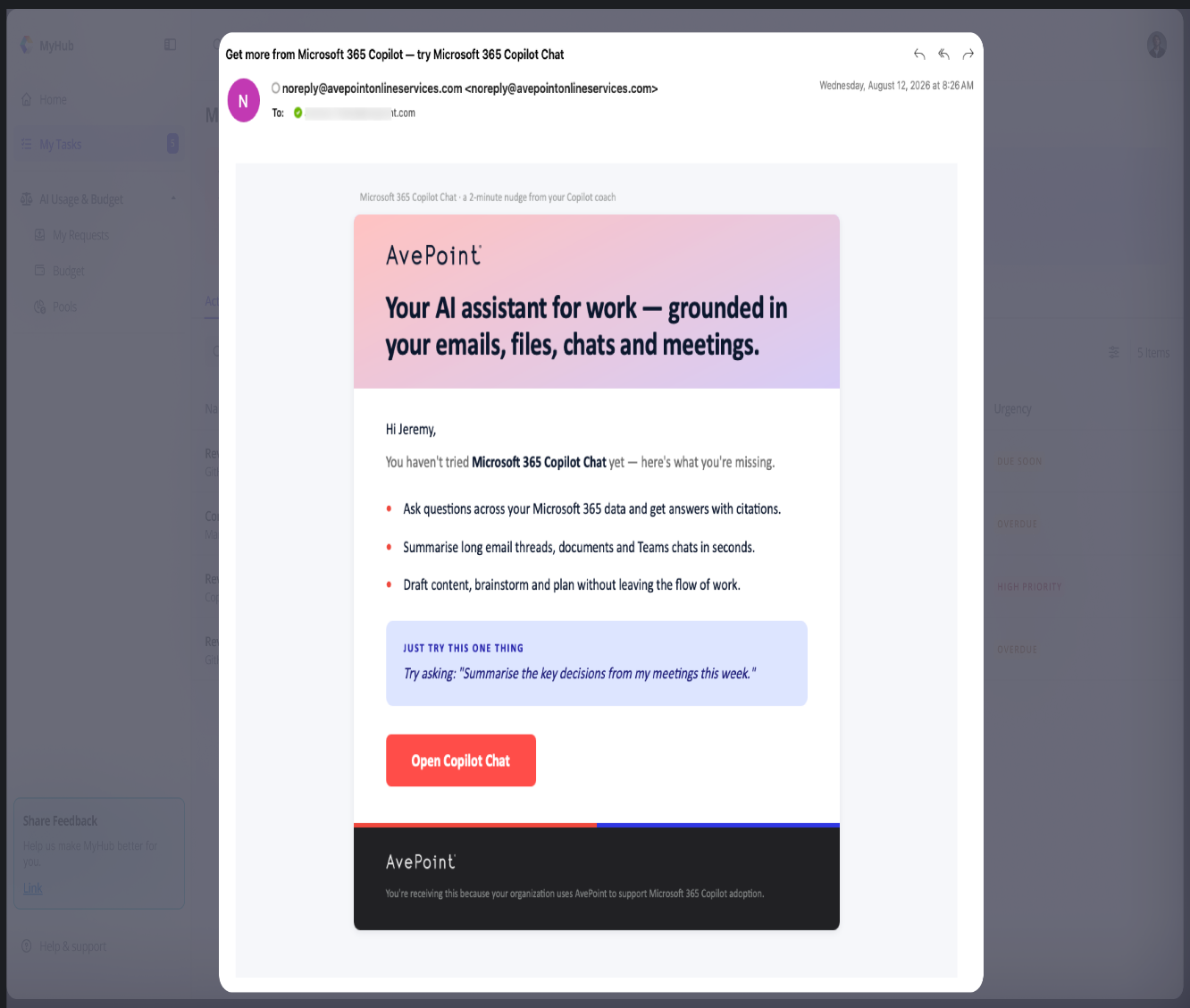
The other side of the coin: licences that are paid for but not used. The platform flags where licences, users or key AI capabilities fall short of expected adoption. You set up a campaign with an audience, the desired behaviour and a measurable goal, and the platform sends users targeted coaching messages. Afterwards you measure whether behaviour and adoption actually change. Optimise also cleans up unused agents, ROT data and stale workspaces, and makes token consumption visible across the organisation.
Why I am excited about this
I have worked with AvePoint Insights, Policies and Cloud Governance, and with Microsoft Purview, for years. Those tools help enormously to get your data in order before AI can reach it. But as soon as the conversation turned to AI itself (which tools, which agents, who owns them, what do they cost, is this allowed under the AI Act) the story stopped. Three things stand out for me:
- It is vendor-neutral. Organisations do not only use Copilot. One platform for Microsoft, Google, Salesforce, Anthropic and MCP servers saves you building a separate governance solution for every AI service.
- It covers the whole lifecycle. From discovery and registration to recertification, recovery and clean-up. The same approach that works for Teams sprawl, now for agent sprawl. And just as with Teams: governance is far easier to introduce before the sprawl sets in.
- Cost and compliance live in the same platform. That makes AI governance not just an IT or security topic, but a conversation with finance and compliance too, backed by numbers.
One caveat for completeness: the platform is in private preview and AvePoint has not yet given a date for general availability or pricing. How it fits alongside what you already do with Purview and the existing AvePoint solutions is something I will be finding out in the preview. My expectation is that your foundation, AI-ready data without oversharing, remains just as important. I wrote earlier about how I tackle oversharing in OneDrive with AvePoint Policies.
See it for yourself or join the private preview
Want to see the platform yourself? AvePoint has an interactive product tour that takes you through all four disciplines; the screenshots in this post come from it. If you are at Microsoft Ignite this week (17 to 20 November), you can get a live demo at booth 5535.
Want to be early? Sign up for the private preview. After you register, an AvePoint specialist will get in touch.
Want to read more? See the AvePoint Trust Platform product page and the announcement press release. And if you would like to talk through how to get a grip on AI in your organisation, feel free to get in touch.
Good to know. At the time of writing the AvePoint Trust Platform is in private preview. Features, supported platforms and naming may change before general availability. This post is based on AvePoint’s announcement, product page and product tour; the screenshots come from that tour. Always check AvePoint’s current information and use your own judgement. You use anything on this site at your own risk; I am not liable for any damage or disruption that results.